




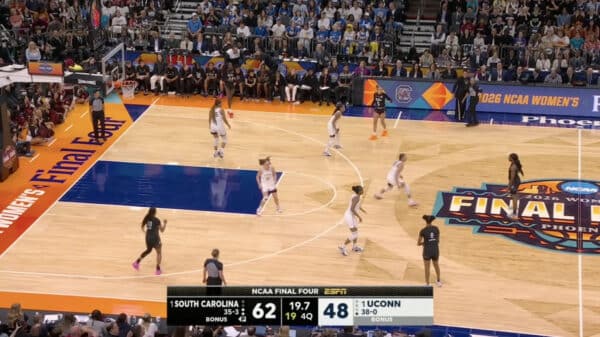

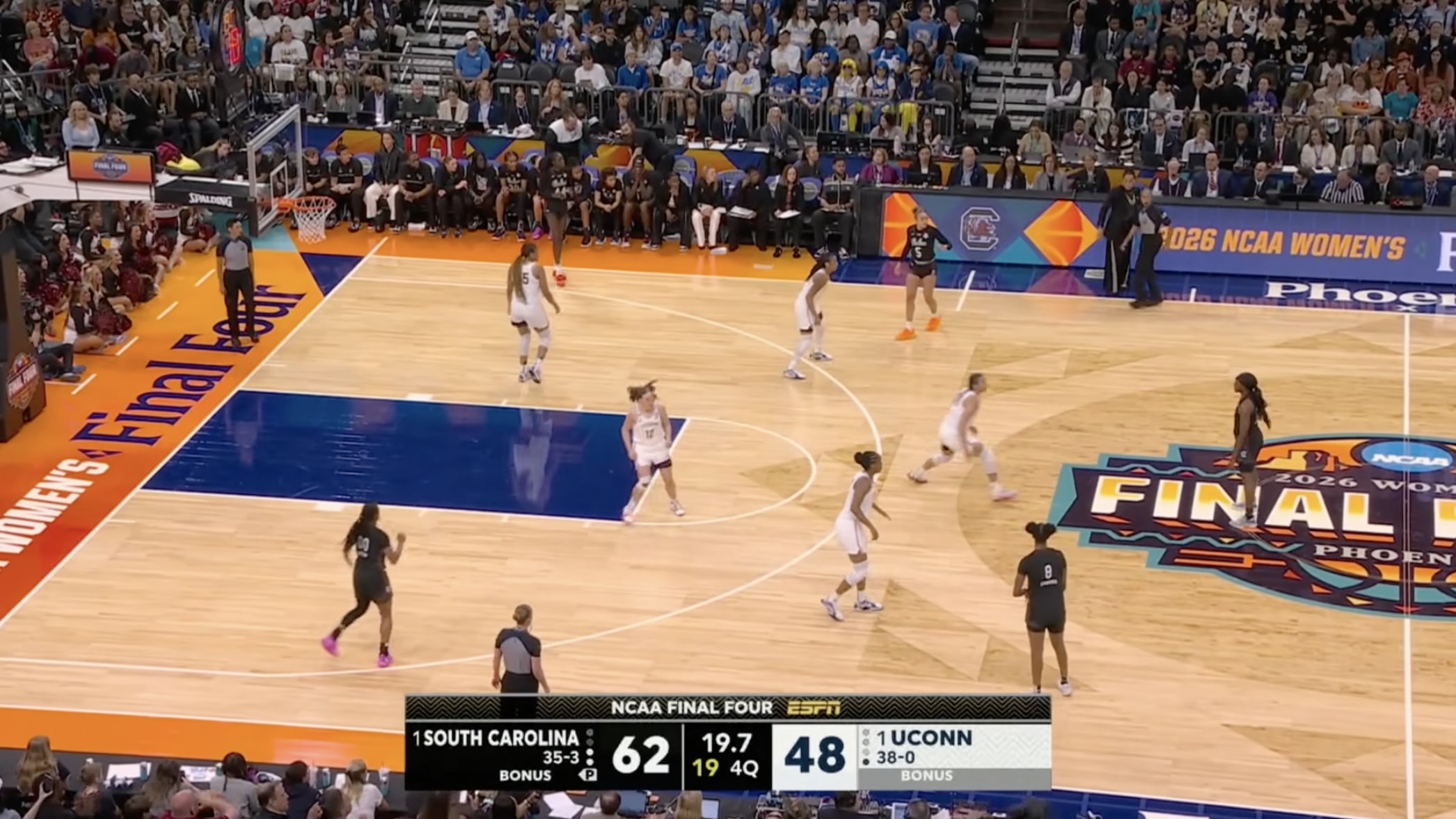

In a surprising turn of events, the South Carolina Gamecocks triumphed over the UConn Huskies with a score of 62-48, but the real narrative of this Final Four clash extended far beyond the scoreboard. The spotlight shifted to the intense exchange between the two iconic head coaches, Dawn Staley and Geno Auriemma.
As the tension built during the game, a heated verbal exchange occurred between Staley and Auriemma at mid-court, necessitating intervention from officials. Though viewers could only see Auriemma’s back as everything unfolded, Staley’s animated reaction was unmistakable, evident to everyone watching.
This moment of discord appeared to erupt following a pre-game handshake, a customary gesture in sports that turned unexpectedly volatile. After the initial incident, Auriemma was seen walking away, only to reignite the discussion moments later, adding to the drama of the game itself.
Post-Game Reactions from Coaches
After securing a place in the National Championship, both coaches faced numerous questions regarding their confrontation. Auriemma, addressing the situation, explained, “The protocol is, before the game, you meet at halfcourt. I stood there waiting for about three minutes.” He implied that there was a miscommunication about the handshake, stating, “I said what I said, and obviously she didn’t like it. I just told the truth.”
On the other hand, Staley expressed her bafflement during her post-game comments, emphasizing her commitment to integrity. “I have no idea,” she remarked. “But (I’ll) let you know this: I’m of integrity. If I did something wrong to Geno, I had no idea what I did.” She defended herself by asserting that she had greeted every individual on the court prior to the matchup.
Auriemma’s Apology
Following the incident, Auriemma issued a public apology, acknowledging his lack of professionalism during the game. In his statement, he expressed regret for detracting from the focus on South Carolina’s impressive performance. “It was uncalled for how I reacted,” he confessed. “The story should be how well South Carolina played, and I don’t want my actions to detract from that. I’ve had a great relationship with their staff, and I sincerely want to apologize to them.”
This confrontation illustrates the high stakes and intense emotions that accompany competitive sports, particularly during critical moments like the national tournament. It serves as a reminder that, behind the strategies and plays, the relationships among coaches are both complex and deeply rooted in mutual respect, even when tensions flare.