


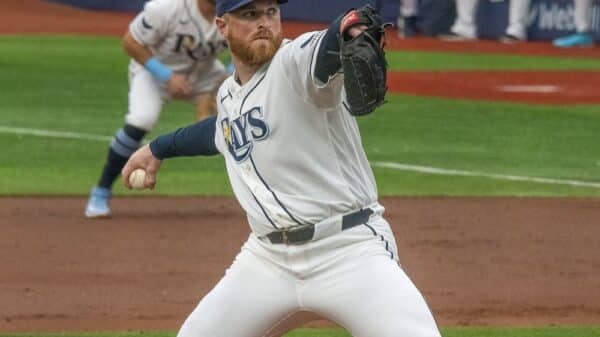
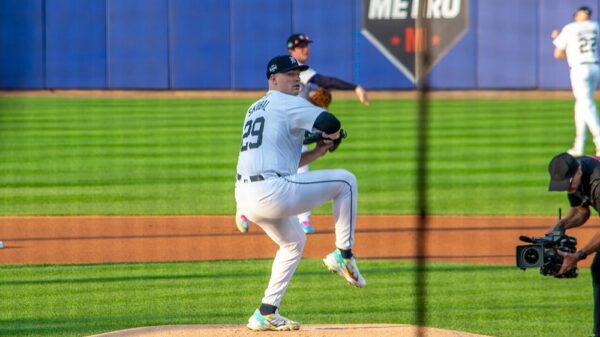



The Minnesota Twins have experienced a surprisingly strong and productive start to their offseason. Catcher Ryan Jeffers officially accepted his $23.15 million qualifying offer, opting to skip a multi-year deal with the club to back himself and re-establish his value ahead of future free agency. Shortly after, the franchise welcomed back veteran right-hander Sonny Gray on a two-year, $55 million contract featuring an opt-out clause after the first season. Gray, who finished fifth in the American League Cy Young voting following a stellar campaign, bolsters a starting rotation that now ranks among the most formidable units in the AL.
Minnesota’s projected starting pitching depth chart features:
- RHP Sonny Gray
- RHP Joe Ryan
- RHP Pablo López (recovering from Tommy John surgery)
- RHP Taj Bradley
- RHP Dean Kremer
- RHP Bailey Ober
- RHP Zebby Matthews
- LHP Connor Prielipp
- RHP Mick Abel
- RHP David Festa (recovering from shoulder and thoracic outlet surgery)
General manager Jeremy Zoll noted that the organization deeply values Gray’s commitment to winning, especially given his clear desire to chase a deep postseason run. With rotation depth pushing arms like Matthews toward potential bullpen roles, the pitching staff’s overall depth is significantly enhanced. Coupled with Jeffers locking down a middle-of-the-order bat, the Twins have engineered a very encouraging opening to the winter.
Following a disappointing 77-85 finish, the franchise has already taken steps to upgrade its roster in an AL Central division that remains wide open. With realistic paths toward contention in both the division and wild card races next season, several important tasks remain on Minnesota’s offseason checklist.
1. Address Non-Tender Decisions
Major League Baseball clubs faced a critical deadline to offer contracts to pre-arbitration and arbitration-eligible players for the upcoming season, or risk losing them directly to free agency. Among the primary non-tender candidates for the Twins were outfielder Trevor Larnach and infielder Royce Lewis. Ultimately, Larnach was non-tendered, while Lewis was traded to the Los Angeles Dodgers.
OF Trevor Larnach
It is uncommon for a player coming off a season with a .352 on-base percentage and a 120 OPS+ to be non-tendered, but the writing was on the wall. Trade discussions involving Larnach had previously surfaced, and the organization possesses a heavily congested outfield. Furthermore, Larnach underwent wrist surgery earlier in the month, prompting the front office to move on rather than commit roughly $6 million in projected arbitration salary to an outfielder recovering from surgery.
1B Royce Lewis
Lewis struggled through a difficult stretch that included a demotion to Triple-A and a defensive switch from third base to first base. Posting a .328 on-base percentage over a substantial sample size across previous seasons raised offensive concerns, particularly at a demanding defensive position. Projected to make around $5 million through arbitration with team control remaining through 2028, Lewis now heads to the Dodgers for a fresh start away from the heavy expectations of being a former top overall draft pick.
2. Strengthen the Bullpen Depth
The Twins began reshaping their relief corps by acquiring Jeff Hoffman prior to a previous trade deadline. With one year left on his deal, he anchors the late-inning setup group alongside other established arms under manager Derek Shelton.
Emerging arms like Morris provide manager Derek Shelton with a promising late-inning trio alongside existing bullpen pieces, while transition candidates from the rotation could add further firepower. Even so, the middle relief unit could benefit from targeted additions. Pursuing mid-tier free agents or exploring trade options offers affordable avenues to round out the relief corps effectively.
3. Optimize Outfield Combinations
An excess of outfield options is a luxury rather than a problem for the front office. Depth allows the club to deploy Byron Buxton primarily as a designated hitter to protect his health, while maintaining quality reserves across the roster.
With top prospects knocking on the door and possessing zero minor-league options remaining—meaning they cannot be assigned to the minors without clearing waivers—roster alignment becomes crucial. Parting ways with pieces like Larnach clears a direct pathway for young talent to secure consistent playing time alongside established roster members.
In summary, the Minnesota Twins have navigated the early stages of the offseason with decisive moves, retaining key contributors, stabilizing the starting rotation, and setting the stage to address remaining roster depth before spring training.